FormCraft: a form platform with an API automation can call
A form builder replacing a per-seat SaaS product, with a token-secured REST API and an outbound webhook so Make can both read from it and react to it instantly.
- REST endpoints
- 7
- field types
- 8
- webhook delivery
- Instant
The problem
The incumbent form product charged per seat, kept uploaded files on its own servers, and offered integration that was awkward to drive from an automation platform.
Migrating meant moving live forms and their historical entries without losing the mapping between a column in an export and a field in the new schema.
What we built
Builder, fill page and entries
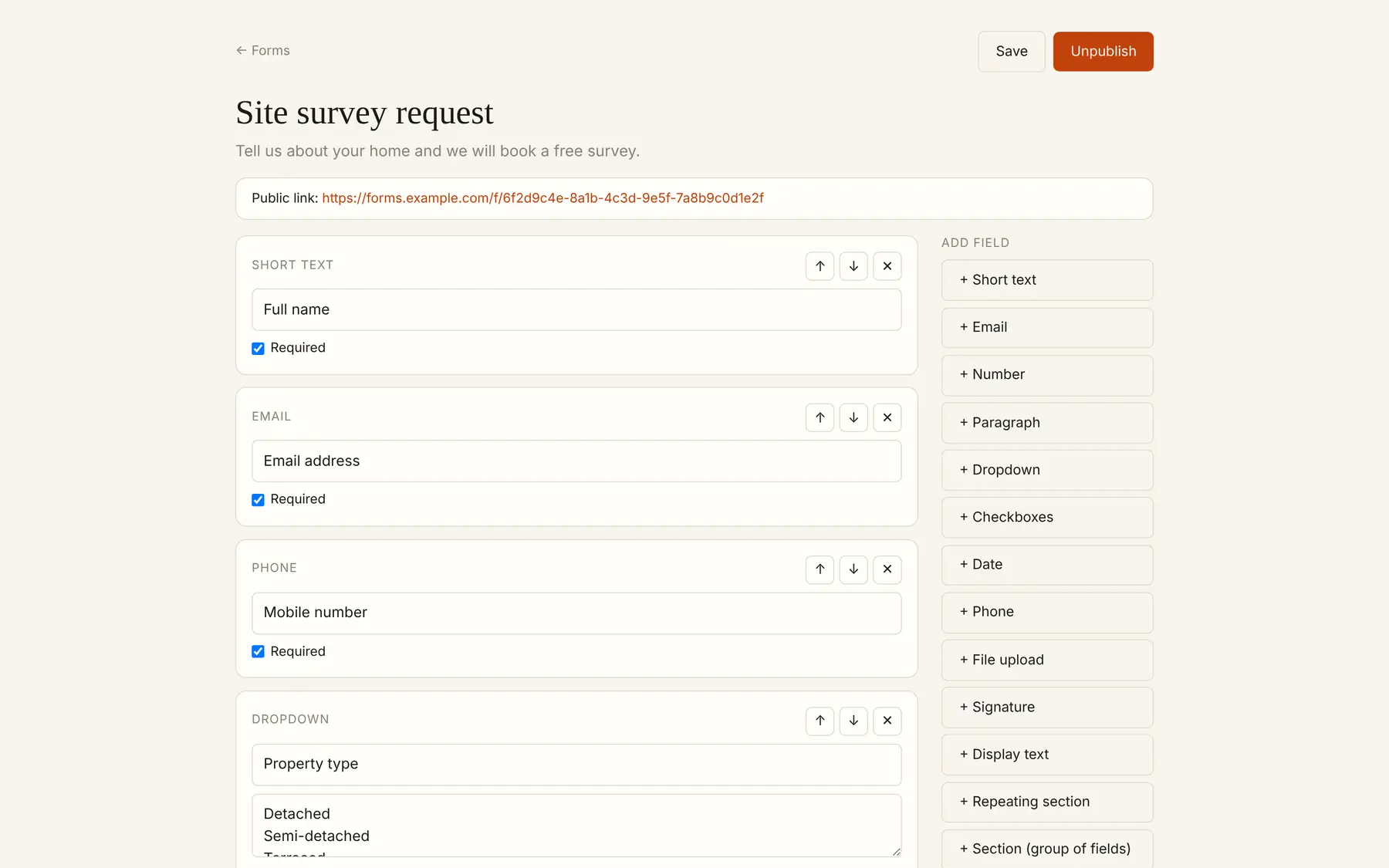
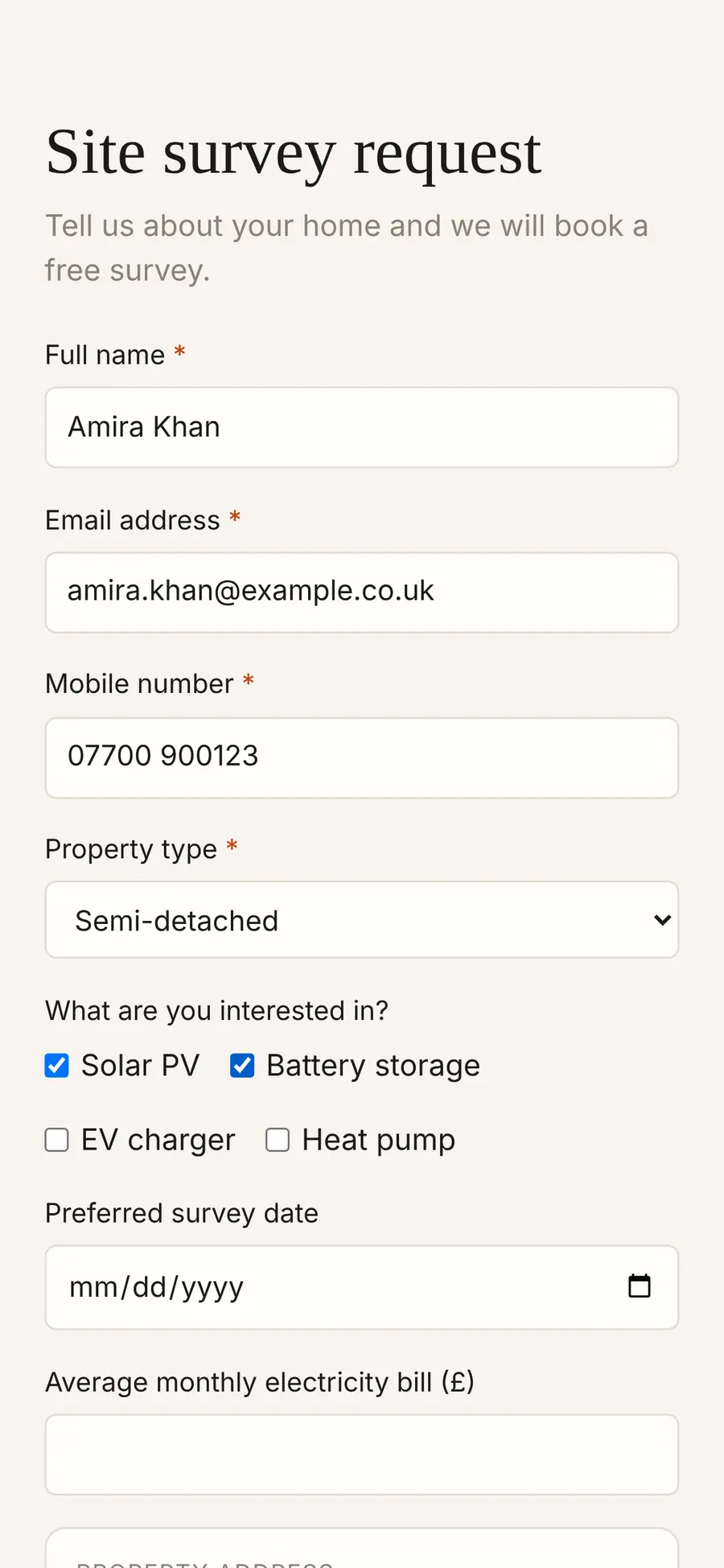
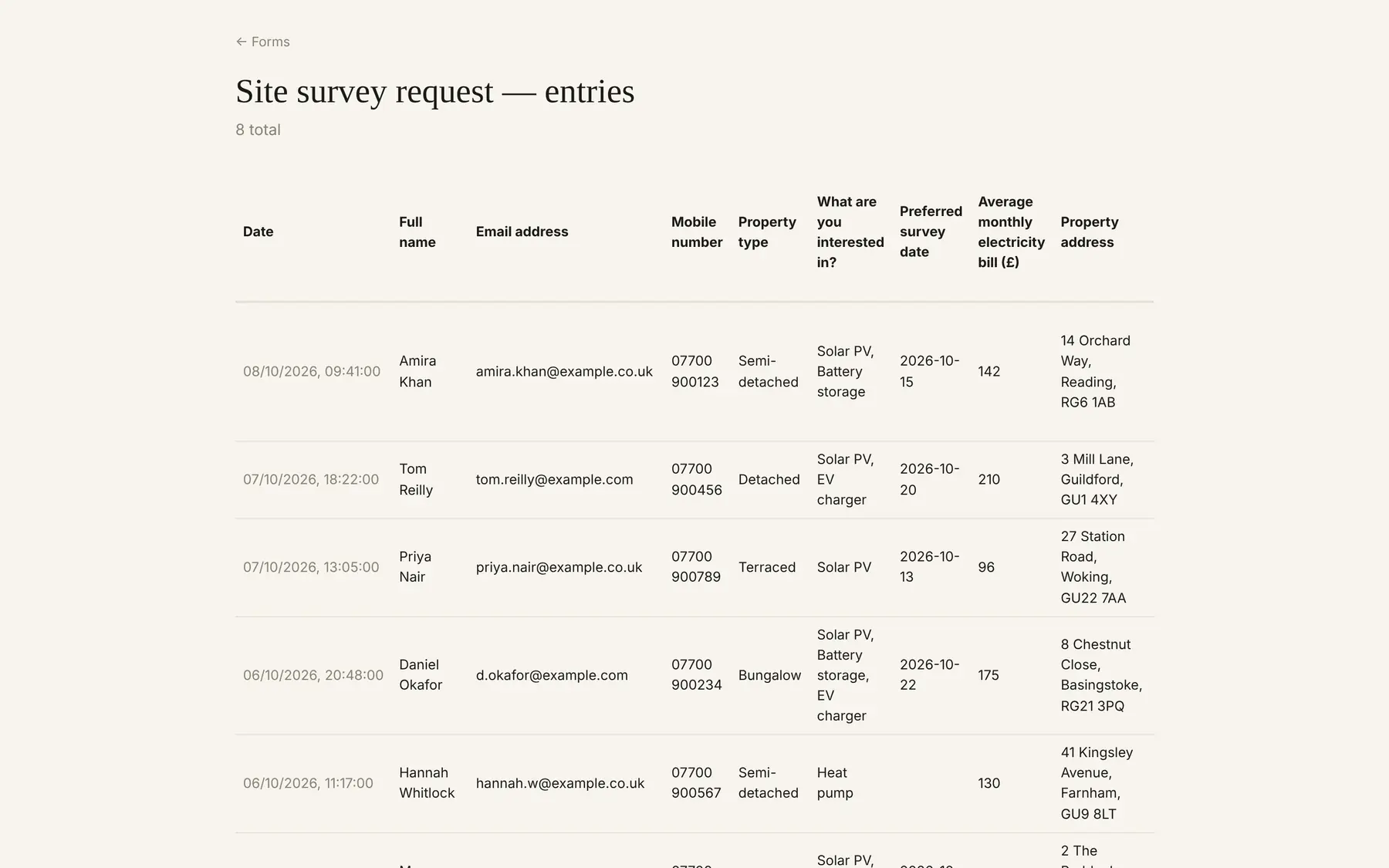
Eight field types with labels, reordering, required flags and publishing; a shareable public fill page for respondents; an entries table per form; and multi-user accounts where each user sees only their own forms.
An API shaped for automation
A bearer-token REST layer to list forms, read a form's field schema, and list, create, read, update or delete entries, with a since parameter for polling. The token is separate from the database credentials, so it rotates without touching anything else.
Instant instead of polling
A database webhook fires on insert, so an automation platform receives each new entry immediately with the entry, form and payload attached. Polling remains available as the fallback.
Migrating the live form and its history
A converter maps the incumbent's export columns onto the new field identifiers, coerces totals to numbers, turns a multi-select column into an array, and drops the platform's own bookkeeping columns, emitting SQL to load the historical entries.
The outcome
Per-seat licensing replaced by a self-owned application with its own file storage.
New entries reach downstream automations instantly, keyed by field identifier rather than by column heading.
Published forms are publicly readable and submittable by design; unpublished ones stay private, enforced by row-level security.
Built with
- Next.js
- Supabase
- PostgreSQL
- REST
- Webhooks
- Make.com
- Vercel
Page copy drafted with AI assistance. Skofi is accountable for it. Editorial policy
Have something shaped like this?
If any part of the above resembles a problem you are living with, a short call is the fastest way to find out whether it is the same problem underneath.
What happens on the call
- 15 minutes, no deck
- We map the process on the call
- A written scope, or an honest no